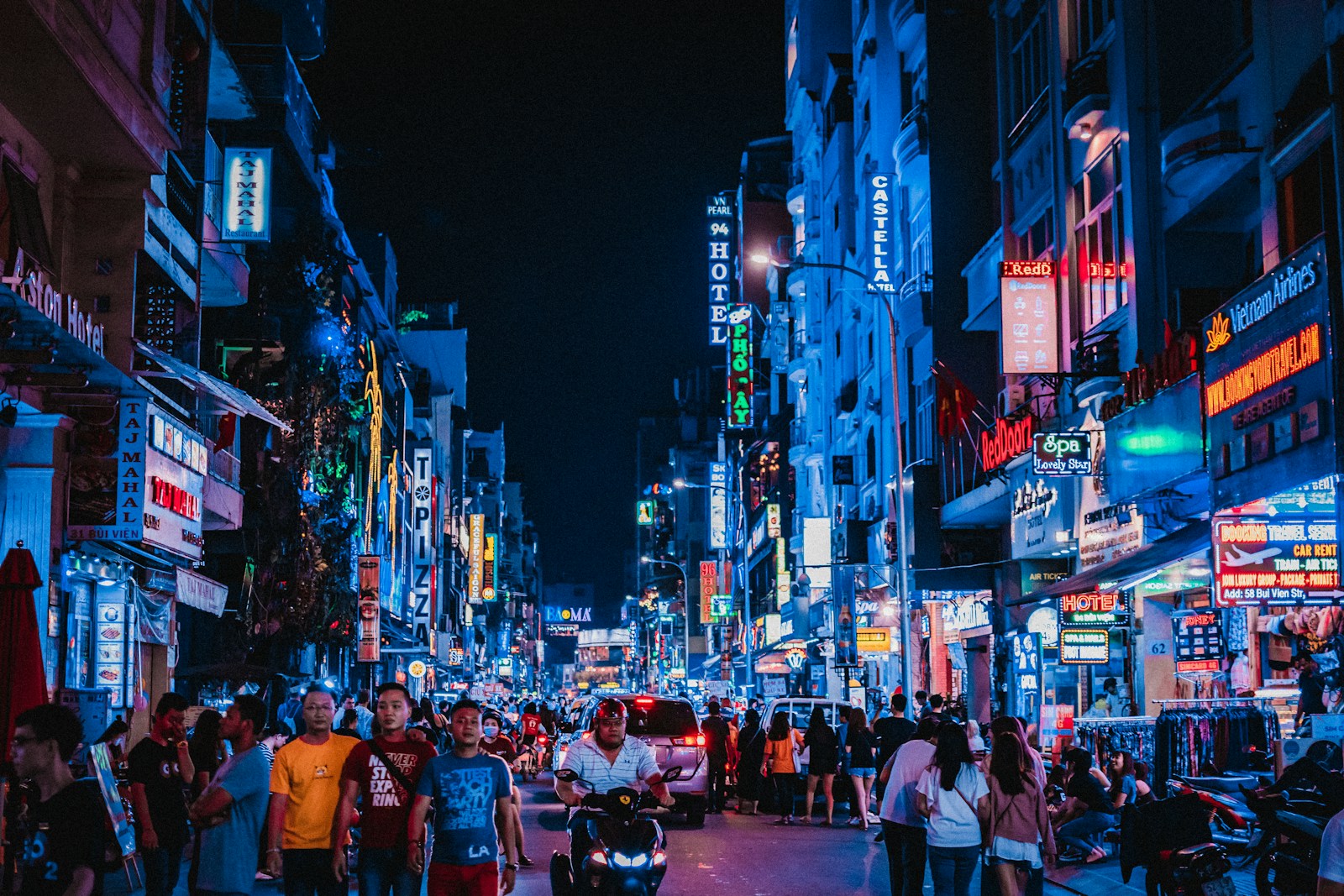
Vietnam's advertising market is expanding faster than any of its Southeast Asian peers, and that growth is quietly rewriting how foreign brands staff a shoot. Vietnam's ad revenue reached roughly 3.05 billion US dollars in 2025, according to sector trackers, with a forecast compound annual growth rate near 7.7 percent, ahead of Indonesia's 4.7 percent and Malaysia's 3.7 percent. Some longer range projections put Vietnam's growth even higher, near 15.9 percent through 2031, the fastest trajectory in the region. Behind those numbers sits a simple operational shift: fewer international brands are flying a full crew into the country, and more are booking a local production crew already based in Ho Chi Minh City.
A market too large to fly in for
More than five thousand advertising agencies are now registered in Vietnam, according to 2024 industry counts, a density that would have been unthinkable a decade ago. That density has produced a deep bench of camera operators, gaffers, production assistants and line producers who work international schedules without needing to be flown in from Bangkok or Singapore. For a brand shooting a regional campaign, the math has changed. A flown in crew from a neighboring hub adds flights, per diems, customs paperwork for gear and days lost to travel. A local crew in Ho Chi Minh City removes most of that friction, and does so in a market growing faster than the ones brands used to default to.

Foreign capital, local hands
Foreign advertising firms already hold a significant share of Vietnam's ad spend, sector analysts note, a presence that has pulled international production standards into the local labor market rather than leaving them at the border. Studios that once served only domestic television and retail clients now staff crews to the specification sheets that European and North American agencies send over: continuity logs, camera reports, release forms in two languages. That standardization is precisely what lets a foreign brand book a crew in Ho Chi Minh City with the same confidence it would book one in Bangkok, without paying the premium of importing the team.
Production houses positioned to serve that international brief, among them studios like Hoang Films in Saigon, sit at the intersection of local crew access and a workflow built for clients abroad, a combination the market did not reliably offer five years ago. A brand's production house in Vietnam no longer needs to be the same company handling the creative brief; increasingly it is a specialized local partner brought in for the physical shoot and handed the finished film archive to review remotely.
Where the savings actually land
The line item that shifts most visibly when a brand switches from a flown in team to a local crew is not creative fee, it is logistics. Analysts covering the region's production economics point to travel, insurance and customs carnet costs as the largest deltas between a flown in shoot and a locally staffed one, often exceeding the difference in day rates between cities. That gap widens further when a project needs more than one shoot day, since a local crew absorbs schedule changes without rebooking flights or renegotiating per diems. For brands running multi market Southeast Asian campaigns out of a regional agency hub, that flexibility increasingly decides where the Vietnam leg of a shoot gets staffed.
Talent density outpaces training pipelines
Roughly 30 percent of Vietnamese creative agencies have already adopted AI assisted production tools, according to recent market data, a figure that signals a workforce comfortable with the software layer international clients expect on a modern shoot: shot logs, cloud review, remote sign off. That comfort did not appear by accident. It tracks a decade of foreign productions training local crews on set, a transfer of practice that has left Ho Chi Minh City with a labor pool fluent in international production paperwork as well as the camera work itself.
A market still separating signal from noise
Not every studio marketed to foreign buyers as a local crew delivers to that standard, and market observers describe a segment still saturated with low cost content shops built for domestic social feeds rather than brand campaigns. The brands moving fastest into Vietnam are the ones doing the vetting themselves, asking for reels shot to international specification and reference checks from other foreign clients rather than trusting a rate card alone. That filtering process is itself a sign of a market maturing past its early, undifferentiated phase, where price was the only variable a foreign buyer could compare.
The broader trend line is not subtle. A market growing at nearly twice the regional average, a deep and increasingly standardized crew base, and a widening cost gap between flown in and local production are pulling more of Southeast Asia's shoot days toward Ho Chi Minh City, one booking at a time.