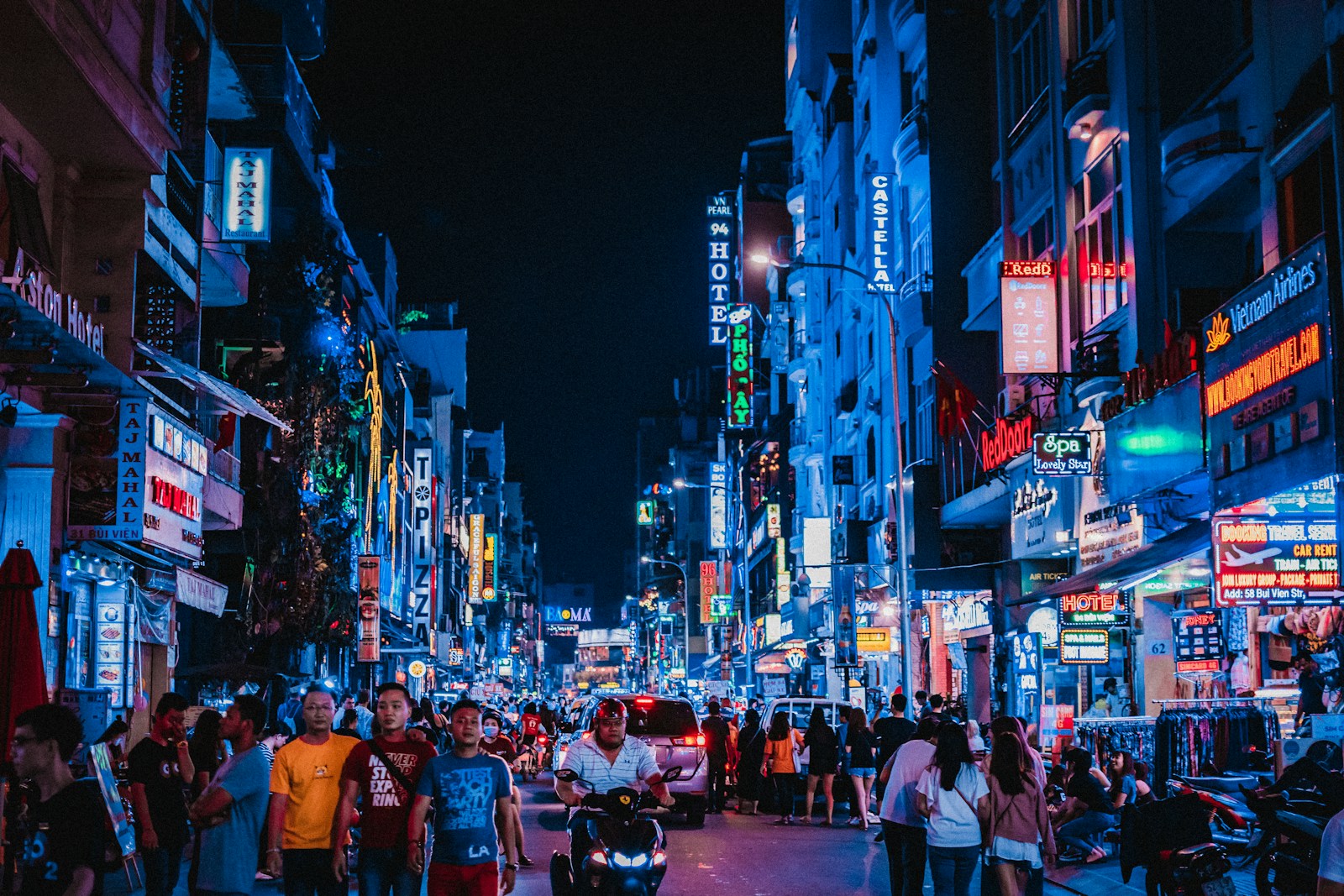
Foreign direct investment into Ho Chi Minh City reached 8.37 billion USD in 2025, up 24.2 percent year on year, with Singapore standing as the single largest source of capital, according to city authorities cited by state media. That inflow of regional money has a quieter cousin: a steady rise in international brands and agencies choosing to hire a production services company on the ground in Vietnam rather than fly in a full crew from abroad.
The distinction matters to a marketer's budget. A production services model lets a brand keep its own creative director, agency team or global campaign concept, while a local partner supplies crew, logistics, permits and equipment. It is a different commercial relationship than commissioning a full creative production, and it is growing for reasons that have little to do with creative taste and everything to do with cost and access.
The outsourcing math behind the shift
Vendor reporting on outsourced video production places the savings of moving work to Southeast Asia at roughly 50 to 70 percent versus maintaining in house teams in North America or Western Europe, a range that should be read as indicative rather than precise, since methodologies vary widely across sourcing firms. Separately, industry surveys have found that over 58 percent of film and television production houses outsourced part of their post production operations as far back as 2023, a trend that has only broadened since as remote review tools matured.
Vietnam is entering that outsourcing conversation later than Thailand, which raised its film production cash rebate to as much as 30 percent with no cap starting January 2025 and logged 491 foreign productions in 2024, or Malaysia, whose FIMI incentive stacks a 30 percent rebate with a 5 percent cultural uplift. Vietnam offers no comparable rebate scheme yet. What it offers instead is Ho Chi Minh City's own gravitational pull as a regional business hub, plus a national policy push: Vietnam's cultural industries strategy targets roughly 7 percent of GDP by 2030, rising toward 9 percent by 2045, with film and advertising named explicitly as priority sectors under a 2025 prime ministerial decision.

Digital growth is pulling budgets toward the ground
The advertising case for shooting where the audience already is keeps strengthening. Vietnam's digital economy reached 39 billion USD in gross merchandise value in 2025, up from 34 billion the year before, according to the Google, Temasek and Bain e-Conomy SEA 2025 report. Online media spend inside that figure grew 16 percent to 6 billion USD, and e-commerce climbed 17 percent to 25 billion USD over the same period. Southeast Asia's wider digital economy surpassed 300 billion USD in gross merchandise value in 2025, with online media advertising growing 16 percent year on year across the region, driven in large part by retail media networks and newer AI powered ad formats.
Vietnam's own audience numbers explain why global brands want footage shot locally rather than adapted from elsewhere. The country counts 79.8 million internet users, a penetration rate of 78.8 percent, and 76.2 million social media user identities, according to DataReportal's Digital 2025 Vietnam figures. Social media ad spend inside the country reached an estimated 398 million USD in 2025, up 12 percent year on year and representing 27.8 percent of total digital ad spend, per We Are Social and Meltwater.
"Southeast Asia is now the largest single share of TikTok's global ad audience, close to a quarter of the platform's total reach," a 2025 Digital Statshot from We Are Social and Meltwater noted, underlining why regional buyers increasingly want assets filmed on the ground rather than dubbed or licensed in from elsewhere.
What a service model actually buys a brand
A brand that hires a production services partner in Ho Chi Minh City typically retains creative control while offloading three categories of risk: local permitting and location access, crew sourcing in a market where day rates run meaningfully below Singapore or the west, and equipment logistics that would otherwise require importing gear. Some studios operating in the city, Hoang Films among them, blend that services capacity with a smaller, integrated creative team, a hybrid that sits between a pure fixer operation and a full agency of record.
That hybrid model appeals in particular to marketing teams managing a regional campaign across several Southeast Asian markets at once, where a single trusted production house in Ho Chi Minh City can absorb the Vietnam leg of a shoot without the brand standing up a new vendor relationship from scratch each time. The commercial logic mirrors what streaming has already done to content budgets more broadly: global content spend rose 6 percent to 95 billion USD in 2025, according to Ampere Analysis, and a growing share of that spend is now sourced from production markets outside the traditional Los Angeles and London axis, a shift accelerated by Los Angeles itself logging its worst shoot day total on record outside the pandemic in 2024, with a further 16.1 percent decline in 2025 versus the year before, according to FilmLA.
A market still defining its own terms
What distinguishes Vietnam from Thailand or Malaysia at this stage is less an incentive structure than a maturing service layer. Where Thailand markets itself through its rebate and Malaysia through FIMI, Vietnam's pitch to international buyers is closer to raw economics and access: a large, digitally engaged domestic audience, a business hub in Ho Chi Minh City backing FDI targets of roughly 11 billion USD for 2026, and production partners increasingly capable of running a shoot to international specification without a foreign crew ever boarding a flight. Whether that is enough to compete with rebate driven markets over the next several years remains an open question inside the region's production economics, but the search behavior of brands and agencies already shows where interest is heading.