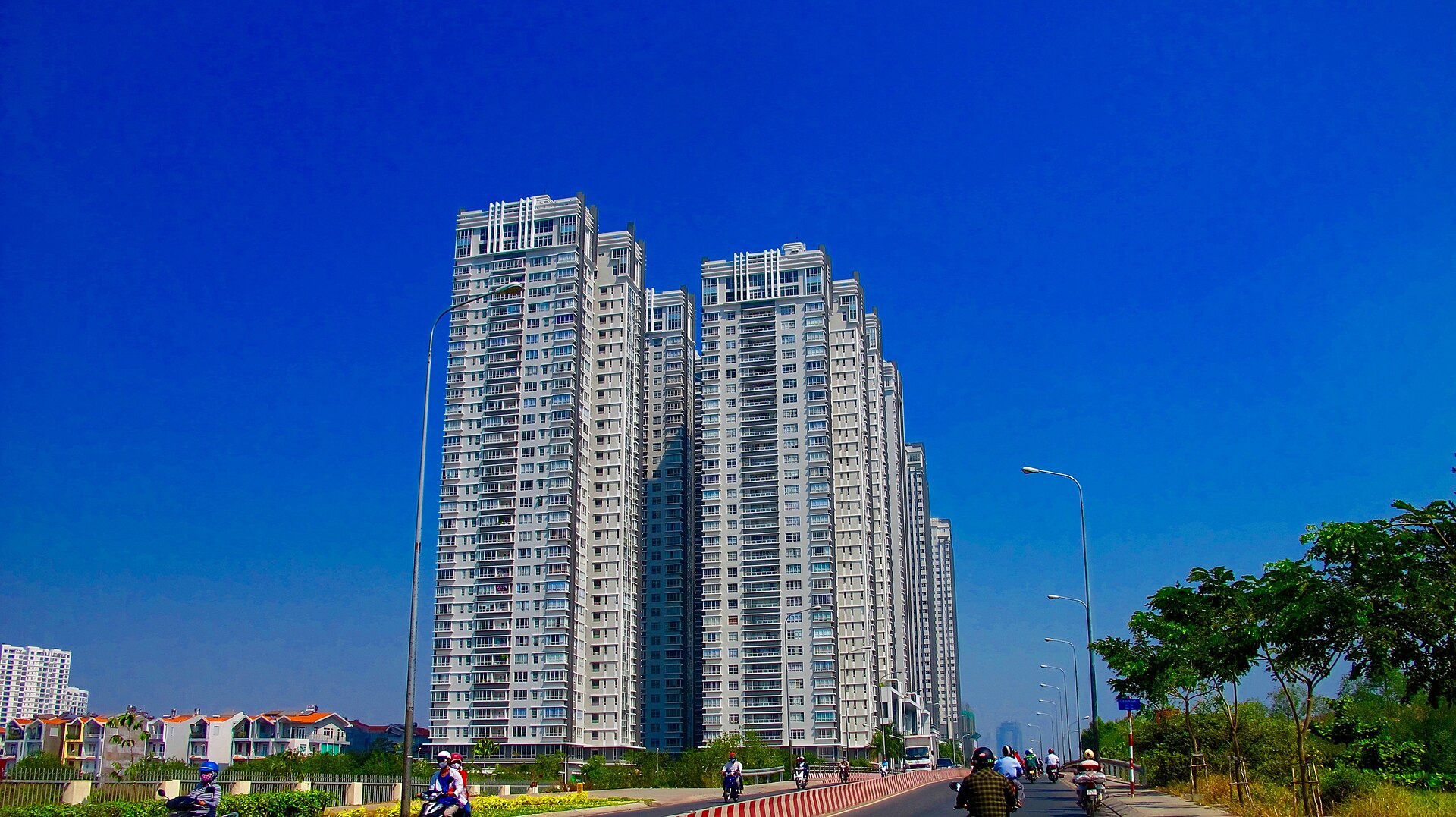
Ho Chi Minh City is about to receive more new apartments than it has seen in years, and fewer buyers are rushing to claim them. Avison Young puts expected new supply in the city at roughly 15,000 units for 2026, against about 10,000 in Hanoi and 4,000 in Da Nang. Cushman & Wakefield, tracking the same market, recorded a sharp drop in launches in the first quarter, around 1,200 units, down 62 percent on the previous quarter. The two readings differ with boundaries and definitions, yet they point the same way: a market where inventory is rebuilding while absorption stays thin.
That tension is where real estate video production in Vietnam now sits. When every unit sells on a launch weekend, a render and a brochure suffice. When luxury uptake in Ho Chi Minh City stays below 30 percent, according to market trackers, and close to 90 percent of newly launched supply falls in the high end segment, the marketing brief changes character.
A supply rebound meets cautious buyers
VinaCapital describes 2026 and 2027 as a phase of rising supply after years of shortage. Floating mortgage rates of 13 to 16 percent, reported by regional property press, are encouraging some owners to cut asking prices, and secondary market prices in the city have slipped by roughly 5 to 8 percent. Annual price growth, by one analysis, has cooled to about 13 percent, half the pace of the recent surge.
For developers, the consequence is a longer sales cycle and a buyer who compares more before committing. Marketing spend that once chased scarcity now has to justify a price. Film, in that setting, is less an ornament than an instrument of persuasion, used to show a district, a lifestyle and a build quality that a static image cannot carry.
What buyers say they watch
The evidence on property video is thinner than vendor blogs suggest, and much of it is recycled. The most defensible recent figure comes from the National Association of Realtors: in its 2025 Profile of Home Staging, 48 percent of buyers’ agents rated available listing videos as more or much more important to clients, behind photos at 73 percent and staging at 57 percent, but ahead of virtual tours at 43 percent. Video is not displacing photography. It is becoming the second layer that buyers expect.
The Vietnamese audience is well placed for that shift. DataReportal’s Digital 2025 report counts 79.8 million internet users in Vietnam, a 78.8 percent penetration rate, and 76.2 million social media user identities. Smartphone penetration stands at 84.4 percent, against a global average near 63 percent. A buyer in Saigon or Hanoi is already watching on a phone, and so is the overseas Vietnamese buyer, the expatriate and the regional investor.
Where the advertising money is going
Property is competing for attention inside a market that is tilting toward video. Dentsu projects online video advertising to grow 11.5 percent worldwide in 2026, roughly twice the pace of the total ad market, and social media advertising to grow 11.4 percent. In Vietnam, We Are Social and Meltwater estimate social media advertising at about 398 million US dollars in 2025, up 12 percent and equal to 27.8 percent of digital ad spend.
Real estate marketers, historically reliant on hoardings, portals and show flat events, are being pulled into the same channels as consumer goods brands. That raises the production bar. A developer’s film now runs beside a beverage or retail commercial in the same feed, and viewers do not grade it on a lower curve.
Why the brief is shifting from showing to telling
The traditional property film catalogues amenities: pool, lobby, gym, view. The format that is gaining ground in regional markets leans on narrative, a resident, a neighbourhood, a day in the life, with the building as setting rather than subject. Analysts who follow the regional creative economy attribute this to oversupply in several Asian cities, where differentiation by specification has run out of road and differentiation by identity has taken its place.
Vietnam adds a policy tailwind. The national cultural industries strategy approved in late 2025 targets roughly 7 percent of GDP by 2030, naming film and advertising among priority sectors, which supports a deeper domestic bench of producers, directors and post production talent. Studios such as Hoang Films, a production house in Saigon with about three years of operation and more than fifty projects, sit within that bench, alongside a growing number of independent houses serving both developers and the agencies that brief them.
The cross border angle
Foreign capital is part of the story. Regional developers, hospitality groups and funds with Vietnamese assets increasingly commission films in Ho Chi Minh City for investor decks, overseas sales roadshows and brand launches. For these buyers, the question is usually practical: whether a production house in Saigon can deliver to an international standard at a cost that sits below Singapore or Bangkok. Comparative cost studies of the region have consistently placed Vietnam at the lower end for commercial work of equal ambition, and the filmography of local houses is increasingly the first filter in procurement.
What to watch
Three indicators will shape demand through 2027. The first is absorption: if uptake stays under 30 percent in the luxury tier, developers will lean harder on content to move inventory. The second is mortgage pricing, since easing rates would restore the volume logic in which marketing is a lesser concern. The third is the spread of platform commerce into property, with listing portals and social channels already competing for the same short form attention that retail has captured.
None of this makes property video a category in its own right. It makes it one more sector in which Vietnam’s production market is being asked to do work that was once commissioned in Singapore, Bangkok or Hong Kong, at a moment when the buyer is more patient, the audience more mobile and the competition for a single view more crowded than it was two years ago.