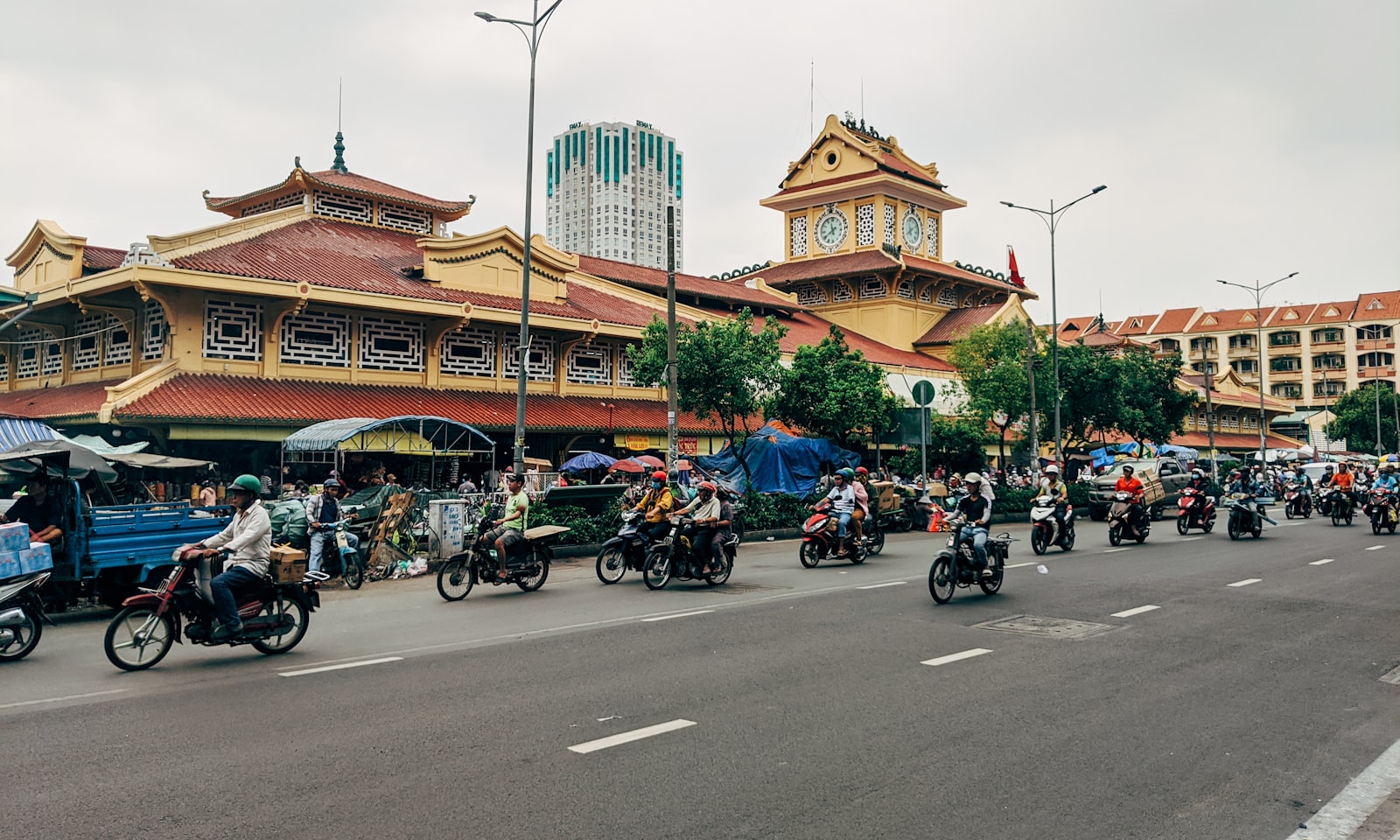
When a trade title usually preoccupied with Hollywood deal flow stops to measure Vietnam, the signal is worth reading carefully. In November 2025 Variety reported that Vietnam has become Southeast Asia’s most active buyer of international television formats, taking roughly a third of the region’s unscripted format acquisitions, even as its audience abandons traditional broadcast for streaming. The piece, as Variety reported, frames the country less as a passive importer of Western content and more as a regional adapter, one that takes formats, mostly from other Asian markets, and rebuilds them for a domestic audience that is growing faster than almost anywhere else on the continent.
That distinction matters for anyone tracking where commercial production capacity is forming. A market that buys formats and remakes them locally needs crews, directors, finishing houses and a sustained pipeline of paid work. Format buying is, in effect, a leading indicator for production demand. And the figures behind the appetite are not soft. Variety noted Vietnam grew from about 90 cinema screens in 2010 to more than 1,200 today, with the wider film sector compounding at roughly 10 percent a year since the early part of the decade. Screen count is a crude proxy, but a useful one. It tracks the physical demand for finished moving image, and it has multiplied more than thirteenfold inside fifteen years.
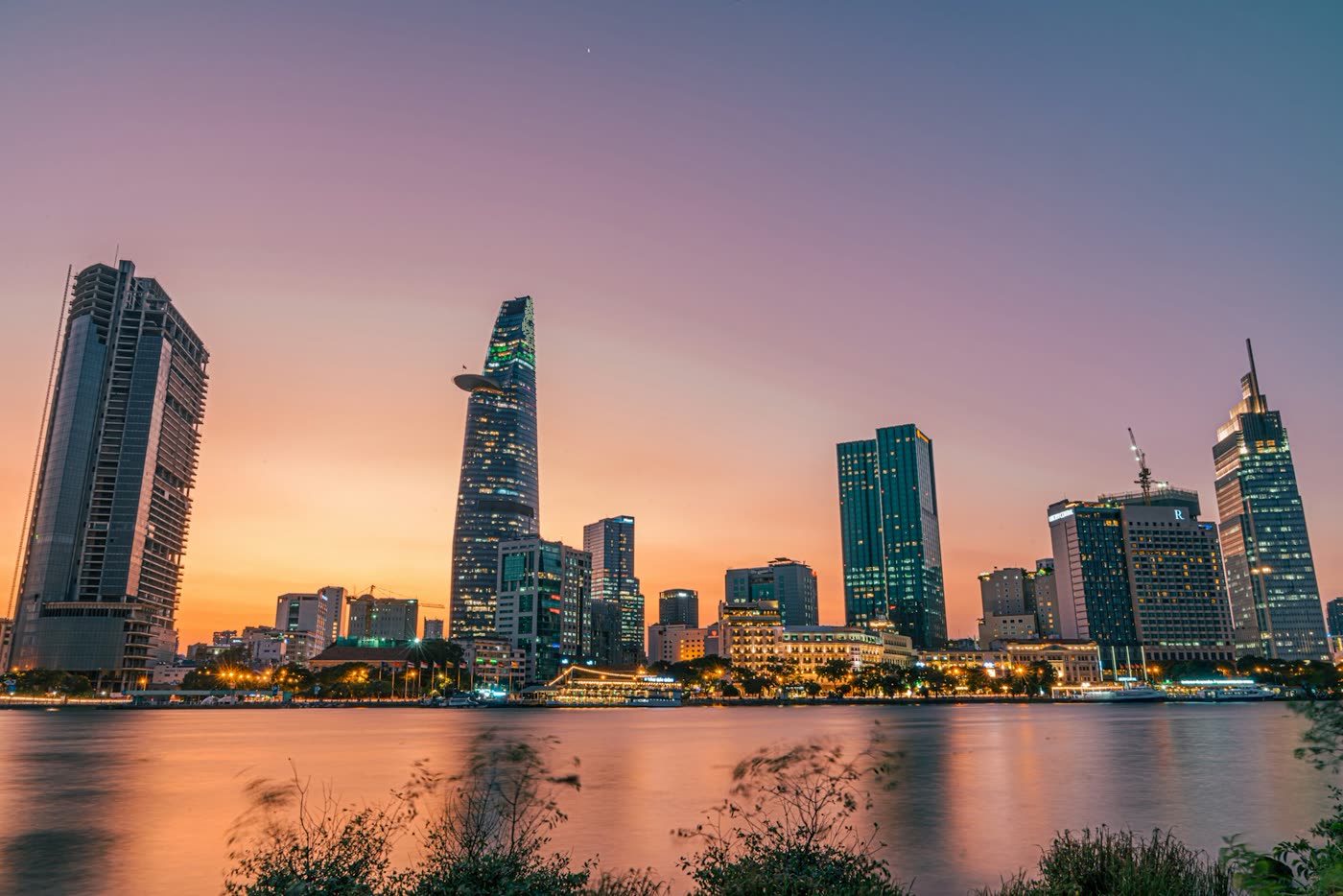
A market that buys formats now builds them
The audience shift sharpens the point. In the first half of 2025, Variety recorded streaming subscribers in Vietnam climbing 33 percent to around 70 million while pay television contracted from 22 million to 16.5 million. Money follows eyeballs. As viewing moves to phones and connected screens, commercial budgets move with it, toward digital and toward short form video. This is the same gravitational pull visible in the global numbers. Dentsu projects digital will account for 68.7 percent of all advertising investment in 2026, and expects online video to grow about 11.5 percent that year, roughly twice the pace of the total market. A country where the digital transition is happening at speed, off a young and connected base, is a country where that video demand lands with unusual force.
Vietnam’s connectivity underwrites the case. DataReportal counted 79.8 million internet users at the start of 2025, a penetration rate near 78.8 percent, alongside 76.2 million social media identities. Smartphone penetration sits at 84.4 percent against a global average closer to 63 percent. These are not the metrics of a peripheral market. They describe an audience that is already mobile first and already saturated with video, the precise conditions that generate continuous demand for commercial content rather than occasional campaign spikes.
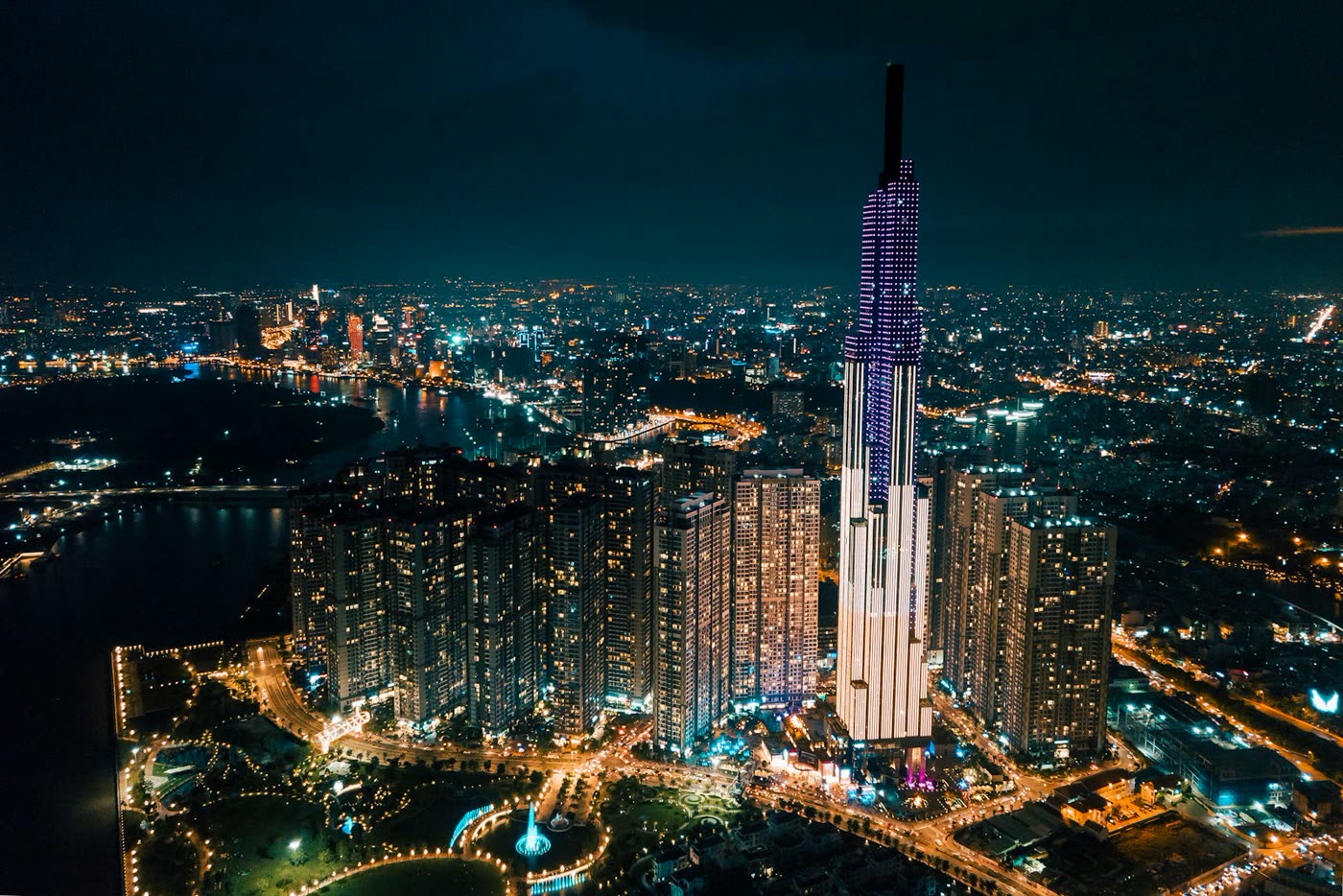
The macro tailwind Singapore and Bangkok lack
What separates Ho Chi Minh City from the established regional hubs is growth, not maturity. Variety pointed to Vietnam posting 7.09 percent GDP growth and targeting 8.3 to 8.5 percent for 2025, a trajectory that distinguishes it sharply from slower expanding centres such as Singapore. Bangkok and Singapore remain the region’s default choices for high end commercial production, with deeper infrastructure and longer client relationships. Bali competes on landscape and cost for a certain kind of shoot. None of them is growing the way the underlying Vietnamese economy is growing, and advertising spend tends to track domestic economic momentum more faithfully than reputation does.
The local money is arriving in volume. Ho Chi Minh City registered foreign direct investment of 8.37 billion USD in 2025, up 24.2 percent on the prior year, according to city authorities. Vietnamese online retail reached 16.35 billion USD in 2025, a rise of 34.75 percent on Metric’s reading, and the wider Southeast Asian digital economy passed 300 billion USD in gross merchandise value the same year on the Google, Temasek and Bain e-Conomy estimate. Retail at that scale buys advertising. Advertising at that scale needs to be produced somewhere, and a meaningful share of it is now produced in Saigon rather than flown out to Bangkok or Singapore.
There is policy behind the commercial pull as well. Vietnam’s Decision 2486 targets cultural industries at close to 7 percent of GDP by 2030, a state level commitment to treating creative output as economic infrastructure rather than ornament. Few governments in the region have set that kind of explicit numerical goal for the creative sector.
Brand investment confirms the credibility
The demand side is visible in who is spending. Campaign Asia tracks Vietnam as a distinct market in its annual brand rankings, a recognition in itself that the country is a serious advertising battleground rather than a footnote to regional coverage. In its 2025 Vietnam brands ranking, the publication placed Samsung at the head of the market, citing strength in service, loyalty and purchase frequency. Multinational brand leadership at that intensity translates directly into commercial production demand on the ground in Ho Chi Minh City. Campaign Asia’s broader regional coverage also notes Saigon agencies such as Happiness Saigon and Dentsu Creative Vietnam appearing in regional Agency of the Year contention, a sign the creative reputation is beginning to catch up with the economic numbers.
Against that backdrop, the studio layer is filling in. Commercial production Ho Chi Minh City is no longer a category populated only by visiting crews and one off service shoots. Studios such as Hoang Films, a production house in Ho Chi Minh City about three years old with more than fifty projects directed and finished for domestic and international clients, represent the kind of resident capacity that distinguishes a genuine hub from a convenient location. The difference between a place that hosts production and a place that owns it lies precisely in whether the directing, the building and the finishing happen locally, on a repeatable basis, for clients who return.
The shape of the contest
None of this means Ho Chi Minh City has overtaken its rivals. Bangkok still commands the regional commercial reputation built over decades. Singapore still holds the regional headquarters and the budgets that flow from them. What has changed is the slope of the lines. The global advertising market is heading past one trillion USD, with Dentsu putting 2026 growth at 5.1 percent and WARC reading the same year nearer 1.30 trillion and 9.1 percent. Asia Pacific spend grows 5.4 percent in 2026 on Dentsu’s figures. Inside that expanding regional pool, Vietnam’s combination of a young connected audience, fast retail growth, heavy multinational brand investment and explicit state backing for the creative economy gives it a steeper curve than the incumbents.
The question is no longer whether commercial production capacity exists in Saigon. The format buying, the screen count, the FDI and the brand spend have answered that. The open question is how quickly the city converts demand into the deeper directing and finishing infrastructure that turns a fast growing market into a durable hub. On current trajectory, that conversion is already underway, and the established centres are watching a competitor that is moving faster than they are.