When Variety covered the Taiwan Creative Content Fest in November 2025, it carried a number that reframes how the region’s screen business should be read. Media Partners Asia put Thailand’s combined film, television, animation and streaming output at roughly 1.4 billion dollars for 2024, with a projection toward 1.5 billion by 2030. The headline rode on the back of HBO’s third season of The White Lotus, but the figure underneath is the story. And the part most relevant to anyone watching Vietnam came almost as an aside: Thailand was described only as the region’s third largest video market, behind Indonesia and Vietnam.
That ranking deserves to be read slowly. As Variety reported, the country generating well over a billion dollars in screen output, hosting prestige international shoots and drawing cash rebates of up to thirty percent, still sits one rung below Vietnam on raw market size. The implication is rarely stated this plainly in trade coverage. Vietnam is not an emerging adjacency to the Southeast Asian content economy. It is one of its two largest poles, and the competitive pressure that comes with that scale lands directly on the studios working inside it.
The numbers behind the ranking
The demand side explains the position. Vietnam counts 79.8 million internet users at 78.8 percent penetration and 76.2 million social media identities, according to DataReportal’s January 2025 figures. Smartphone penetration runs at 84.4 percent against a global average near 63 percent, which means the screen most Vietnamese content is consumed on is a phone held vertically, and the audience reaching for it is proportionally larger than almost anywhere in the world. Online retail reached 16.35 billion dollars in 2025, up 34.75 percent on the year per Metric, a growth rate that pulls advertising and branded video along behind it.
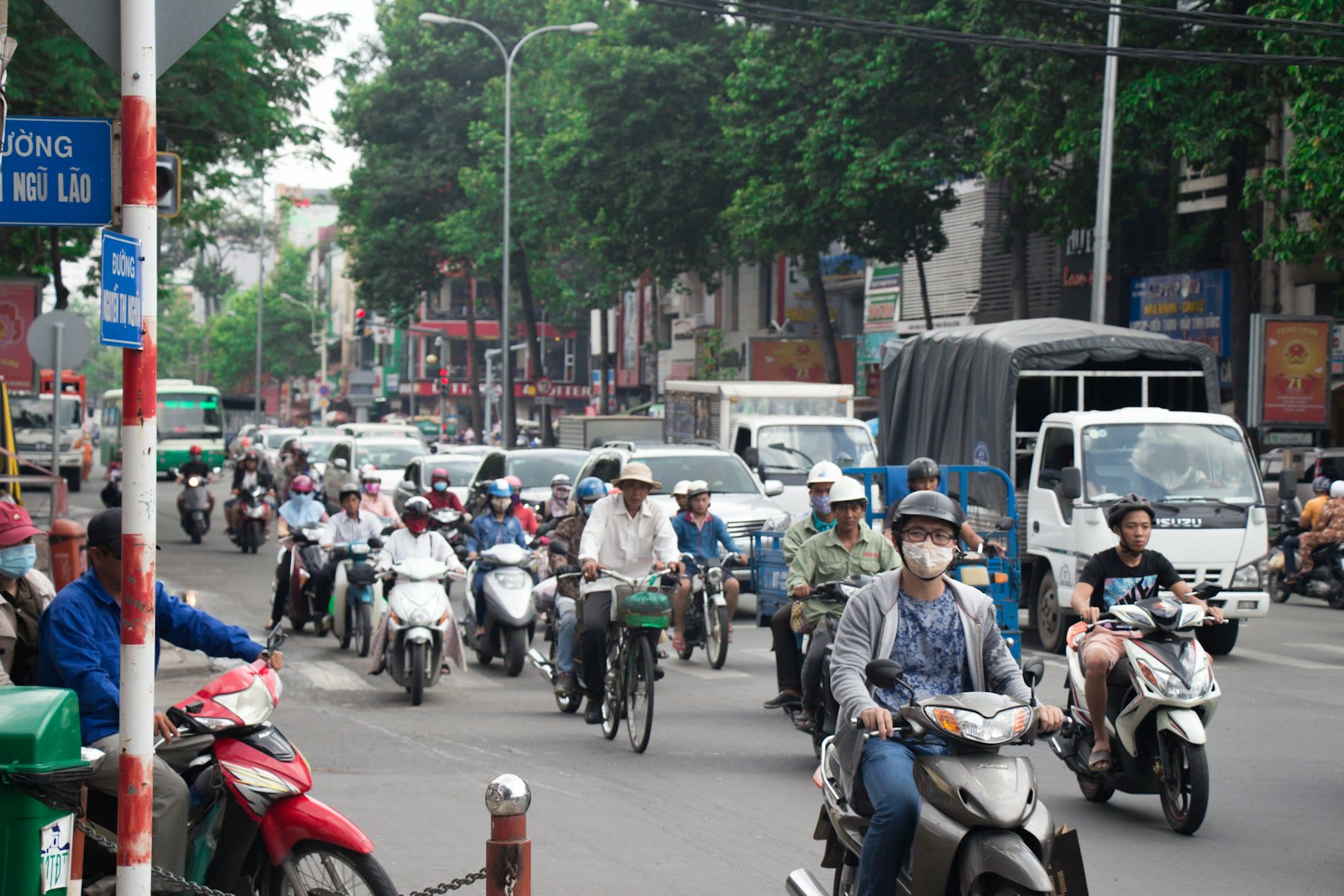
That domestic engine is what makes the country a heavy video market in absolute terms even where average production budgets trail Thailand’s. Volume compensates for ticket size. A creative agency in Saigon is therefore operating inside a market defined less by a handful of marquee international shoots and more by relentless throughput: commercials, brand films, social formats, all produced against a population that is online, mobile first and spending.
The capital backdrop reinforces it. Ho Chi Minh City registered FDI of 8.37 billion dollars in 2025, up 24.2 percent, which keeps a steady flow of multinational brands needing local execution. And the state has put a number on its own ambition, targeting cultural industries at close to seven percent of GDP by 2030 under Decision 2486. Whether that target is met matters less than what it signals: Vietnam is treating creative output as economic infrastructure, the same logic Variety described in Thailand, where eight agencies coordinate on soft power and cultural export.
The professionalisation curve runs through streaming
The Variety piece also showed the mechanism that lifts a regional production sector. International streaming money does the heavy lifting. Netflix put an estimated 200 million dollars into Thailand between 2021 and 2024, Thai titles drew more than 750 million viewing hours on the platform in 2024, and over fifteen of them reached Netflix global non English top ten lists. Foreign production spend across the region now exceeds 100 million dollars a year, with roughly 2,500 projects since 2019 generating over a billion dollars in cumulative value.
The effect of that spend is not confined to the productions it funds. World class crews and infrastructure raise the floor for everyone. Local studios that bid against, or work alongside, a streamer financed shoot inherit a higher standard of expectation, faster turnaround norms and clients who have seen what international execution looks like. The bar moves whether or not a given studio ever touches a streaming commission. Hoang Films, a creative production and post production studio in Ho Chi Minh City roughly three years old with more than fifty projects across domestic and international clients, sits inside exactly that pressure: the comparison set is no longer the studio down the street, it is regional output benchmarked against globally distributed work.
The recognition gap
Scale and craft are one axis. Visibility is another, and on visibility the region still trails its own weight. The Branding in Asia review of Cannes Lions 2025 made the point in hard terms. As Branding in Asia reported, Asia took only five of thirty four Grand Prix, with the wins concentrated in India, Singapore, South Korea and China. For a region that holds this much of global consumption and commercial activity, five is a thin return.
The author’s sharper argument is that the deficit is one of presence, not capability. Asian markets, he contends, have moved from imitation to invention, pioneering formats that the West now borrows: short form video, livestreaming, social commerce. The examples are not subtle. A Chinese livestreamer reportedly generated 7.6 million dollars using an AI avatar, and Chinese platforms shipped creator matching tools before Meta launched comparable features. The phrasing the piece uses, that Asian players have stopped “playing catch up,” captures the shift. Yet only a handful of regional names registered at the festival itself. The conclusion follows coldly: studios and brands across Southeast Asia must show up to shape the global creative conversation rather than spectate from a market that is already large enough to deserve a seat.
For Vietnamese studios that gap is opportunity, not indictment. Being the region’s second largest video market while remaining nearly invisible on the global awards circuit describes a value that has not yet been priced in.
What the macro picture confirms
The wider spend data tells the same direction of travel. Dentsu reads global ad spend above one trillion dollars in 2026, up 5.1 percent, with WARC reading the same year nearer 1.30 trillion. Digital takes 68.7 percent of investment, and online video grows about 11.5 percent in 2026, roughly twice the pace of the total market, per Dentsu. Asia Pacific ad spend grows 5.4 percent. Underneath, Southeast Asia’s digital economy passed 300 billion dollars in gross merchandise value in 2025 on the Google Temasek Bain reading, and PwC tracks global entertainment and media revenue toward 3.5 trillion dollars by 2029.
Online video is the fastest growing line, in the fastest growing medium, in a region whose digital economy crossed a major threshold. Vietnam holds an outsized share of the audience driving it. The Variety and Branding in Asia pieces, read together, describe a market that has the demand, the rising craft floor and the structural tailwinds, and lacks mainly the visibility to match. A studio such as Hoang Films operates at the intersection of all three. The maturation is no longer a forecast. The unresolved question is which of the region’s players will be recognised for having been inside it.