The global enterprise video market crossed the USD 24 billion threshold in 2025 and is projected to reach nearly USD 27 billion in 2026, growing at a compound annual rate of approximately 11 to 12 percent according to estimates from specialist research firms including MarketsandMarkets and Research and Markets. That growth rate is roughly twice the pace of the overall advertising market, which itself reached 1.3 trillion USD in 2026 according to WARC. The divergence between enterprise video expansion and general ad spend growth tells a story about where brand investment priorities are moving, and the production industry is already responding.
The Corporate Segment Leads Growth
Within the broader video production services market, the corporate end-user category held a 28.9 percent share in 2025 and is forecast to register a compound annual growth rate of 9.3 percent through 2034, according to industry analysis. That trajectory reflects a structural shift in how large organisations treat video. What once functioned primarily as a tool for internal communication, recruitment presentations and investor briefings is now recognised as a category of external brand asset with measurable commercial weight. Professional services firms, technology companies, financial institutions and consumer goods brands are among the most prolific commissioners of professional video production globally, according to researchers tracking the sector.
Adoption rates have moved well beyond early practice. Around 78 percent of enterprises surveyed in 2024 reported using video for internal communication, up from 61 percent two years earlier. The implication for production studios is that demand for corporate video is structural rather than cyclical.
The Geography of Production Is Shifting
The cost logic that has driven production budgets east for a generation has become more pronounced since 2022. Los Angeles, the historical centre of commercial production in the United States, recorded a 16.1 percent decline in total shoot days in 2025 compared to 2024, with on-location filming in the first quarter of 2025 down 22 percent year on year, according to FilmLA data. Industry reporting consistently cites production incentives and labour cost differentials as the primary causes.
Thailand raised its film production cash rebate to up to 30 percent effective January 2025, with no maximum cap on qualifying projects, according to the Thailand Film Office. Malaysia's federal investment scheme for media and industry offers an effective rebate of 30 to 35 percent on qualifying expenditure. Vietnam has not established a comparable formal rebate programme, but crew, location and post production costs in Ho Chi Minh City remain materially lower than in Bangkok or Singapore. Research on production outsourcing in the region places indicative savings at 50 to 70 percent versus equivalent North American and Western European in-house production, though the usable range depends considerably on project scope and specifications.

Southeast Asia's Video Economy Creates Its Own Demand
The rationale for commissioning corporate video production in Vietnam extends beyond cost reduction. A parallel commercial logic has emerged from regional market data. Southeast Asia's digital economy gross merchandise value surpassed 300 billion USD in 2025, growing around 15 percent year on year according to the Google, Temasek and Bain e-Conomy SEA 2025 report. Within that economy, video has become the dominant commercial medium: video commerce accounted for an estimated 20 percent of the region's 145 billion USD e-commerce GMV in 2024, rising toward 25 percent in 2025, according to Campaign Asia reporting on the shoppertainment sector.
Vietnam sits near the centre of that momentum. The country's digital video content market was valued at approximately 856 million USD in 2024 and is projected to reach more than 2 billion USD by 2033, at a compound annual growth rate of 10.35 percent, according to IMARC Group analysis. International brands entering or expanding in Vietnam are increasingly commissioning locally produced corporate video that meets their global quality specifications while addressing a domestic audience.
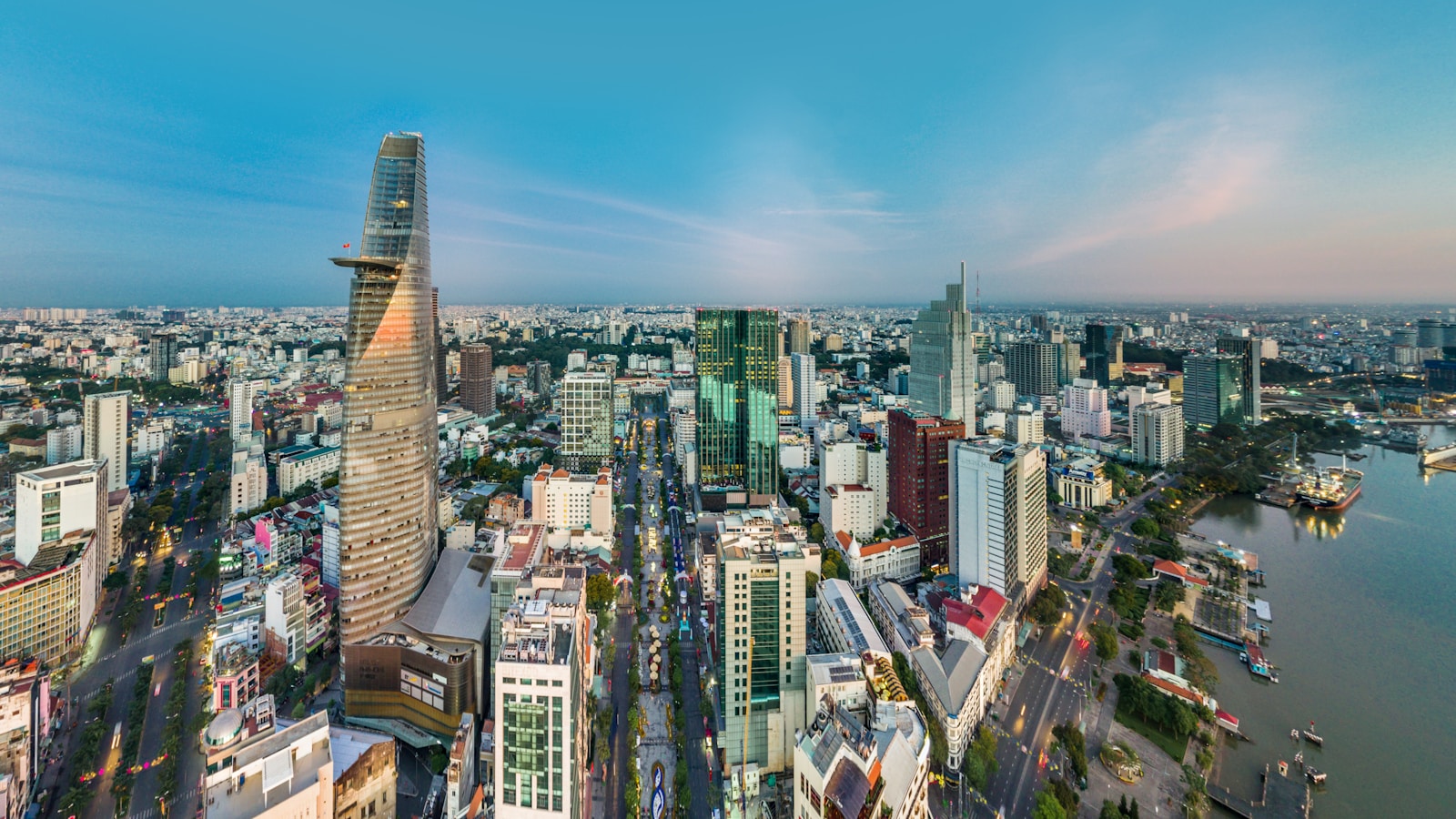
Ho Chi Minh City attracted registered foreign direct investment of 8.37 billion USD in 2025, a 24.2 percent increase year on year, according to data from VietnamPlus and city authorities. As multinationals establish regional headquarters, distribution centres and retail operations in the city, the demand for professional corporate film production, from brand films and company profiles to product campaigns and executive communications, grows alongside them.
The Production Landscape in Ho Chi Minh City
Ho Chi Minh City's production industry has developed in visible ways over the past three to four years. Studios operating in the city now range from high volume, fast turnaround social content producers to smaller outfits with a more precise creative positioning. Among the latter, Hoang Films, a production and post production studio based in Saigon, has built a portfolio of international brand briefs, including work for fashion, consumer goods and food brands shot and finished in the city.
The broader market signal is that the tier of production studios capable of delivering corporate video to international specifications has deepened. Buyers who once found it difficult to identify a capable creative partner in Ho Chi Minh City for a mid-budget corporate film brief now encounter a more developed supply side. The production house Vietnam category has expanded beyond the largest agencies to include boutique studios with verifiable track records on international accounts.
Where the Investment Logic Points
Online video ad spend grew 11.5 percent year on year in 2026, roughly twice the pace of the total advertising market, according to Dentsu's global ad spend forecast. That headline rate masks a more granular picture: the premium segment of corporate video, precisely the long form brand film and cinematic company profile category, is growing as a share of total video investment, as brands seek content that holds value against the accelerating volume of algorithmically produced short form material.
For brand owners and agency buyers evaluating where to commit corporate video production budgets in 2026, the data points consistently in one direction. The enterprise video market is expanding at a sustained double-digit rate. The cost differential between Southeast Asia and Western markets remains material. The creative infrastructure in cities like Ho Chi Minh City has reached a depth that makes commissioning there a considered business decision rather than an exploratory experiment.