The global online video advertising market grew 11.5 percent year on year in 2026, roughly twice the pace of the total ad market, according to Dentsu's global forecast. In the United States alone, digital video ad spend surpassed 80 billion dollars in the same year, per IAB data, growing nearly 20 percent faster than overall digital advertising. Across Southeast Asia, online media advertising expanded 16 percent in 2025, according to Google, Temasek and Bain's e-Conomy SEA report. The money is there. What the spend data does not capture is how much of it disappears inside the production chain before a frame reaches a screen.
The Relay Race That Erodes the Brief
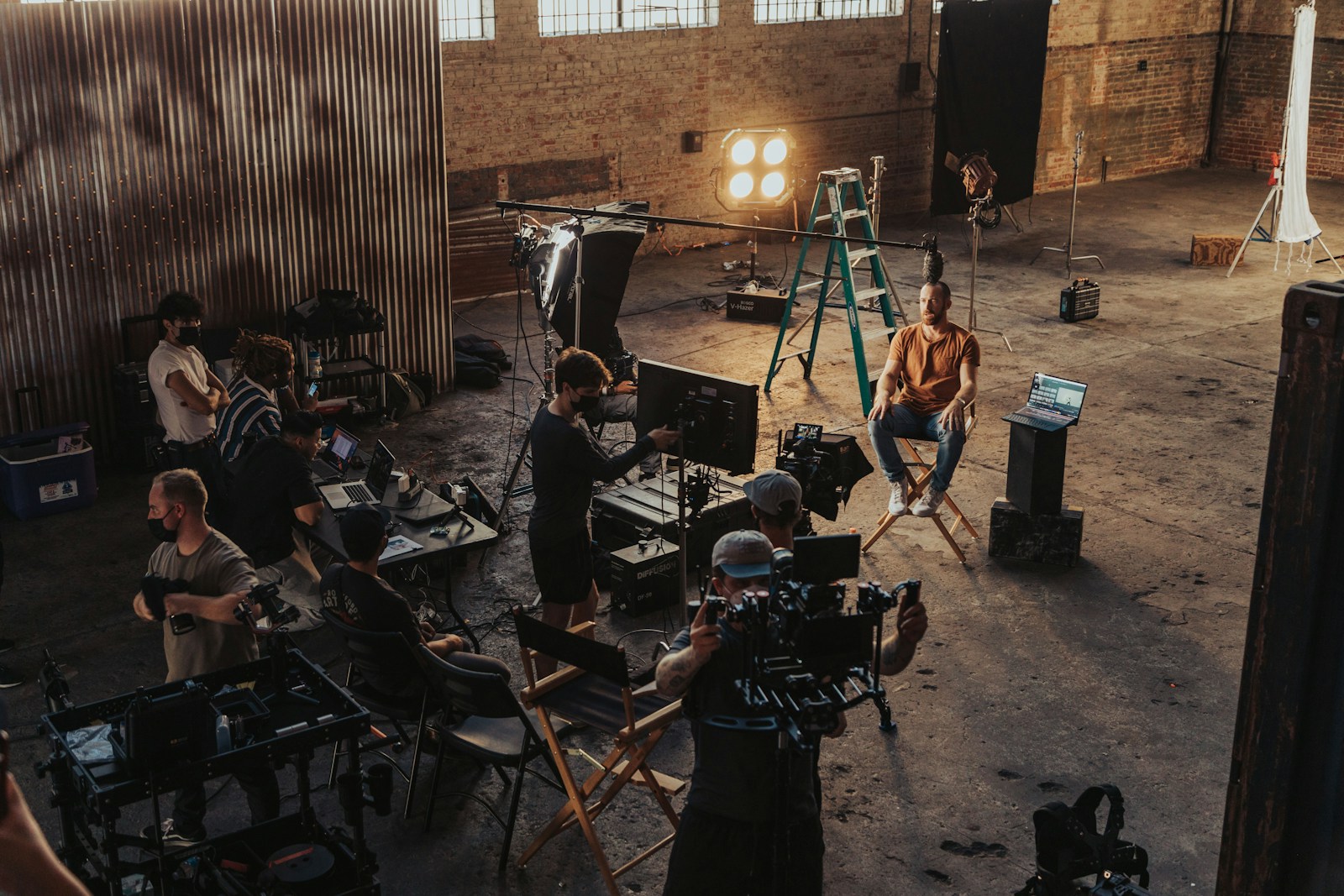
Commercial video production, as it has been structured for decades in major markets, is a sequential relay. A director shoots. An editor receives the footage and reconstructs intent from it. Where sound and motion graphics teams enter separately, the brief circulates once more, read and interpreted anew by each arriving specialist. What a brand describes in a preproduction meeting can survive intact through the shoot day, and still emerge from post production as something the marketing team barely recognizes.
This is not a failure of individual craft. It is an arithmetic consequence of specialization. A US film and video editor commanded a median annual wage of 70,980 dollars in 2024, according to the Bureau of Labor Statistics, a rate built on the premise that editorial judgment is a discrete and distinct skill from direction. Add the fringe loads that US guild structures place on crew wages, estimated at 28 to 32 percent above gross by industry reporting, and the economics of maintaining separately billed specialists throughout the production chain become clear. Fragmentation was priced in from the start.
Where the Cost Appears
The commercial brief does not break in one place. It thins gradually. A director who cannot answer the editor's questions about shot priority because they are already contracted elsewhere. An assembly cut built from footage whose internal logic the editor was not present to observe. A client who watches the first version back and cannot locate the story they approved in the mood board.
Revision cycles lengthen. Delivery windows compress from the wrong end. Los Angeles recorded a 16.1 percent decline in total shoot days in 2025, with Q1 2025 on location filming down 22 percent year on year, according to FilmLA. Production is moving, and part of what drives it to move is the search for cost structures and creative models the traditional industry was not built to supply.
One Hand, No Translation Required
The alternative that has become most visible at the intersection of independent filmmaking and commercial work is structurally different, not merely cheaper.
When a director and editor work as the same person on the same project, the intent encoded during production does not require translation at the editing stage. Shot choices are made by the same mind that will weigh them in the sequence. The rhythm imagined on set arrives in the cutting room already understood. The gap between what a client asked for and what they receive narrows not because steps are skipped but because fewer misreadings accumulate between the original idea and the finished film.
The model is particularly suited to brand films and short form commercial work, the formats growing fastest within the online video category. These are commission types where narrative economy matters more than crew scale. A 90 second film aimed at a social audience regularly carries more commercial freight than a broadcast spot twice its duration at three times its cost. Buyers who have commissioned both are beginning to notice the difference in what survives the edit.

Vietnam and the Integrated Model
The economics of unified creative direction fit cleanly against the cost profile of emerging production markets. Outsourcing video production to Southeast Asia has been reported to generate savings of 50 to 70 percent versus in house production in the United States, Canada or Western Europe, a range vendors describe as directionally accurate rather than guaranteed. Within that region, Ho Chi Minh City offers a lower total cost structure than Bangkok or Singapore, positioned in a commercial culture built on a video first domestic audience.
Vietnam's digital economy reached 39 billion dollars in GMV in 2025, up from 34 billion in 2024, according to the e-Conomy SEA report by Google, Temasek and Bain. Vietnamese smartphone penetration sits at 84.4 percent against a 63 percent global average, per DataReportal figures from early 2025. TikTok reaches 76.1 million users aged 18 and over in Vietnam by late 2025, placing the country among the platform's largest markets globally. Brands moving commercial video production toward Vietnam are not only chasing a lower price tier. Many are chasing a production model that major markets have made structurally expensive to maintain.
Commissioning a director and editor on the same project in Vietnam, where smaller studio infrastructure has normalized the integrated role from necessity and then refined it into practice, is increasingly the decision that keeps the brief intact from the first conversation to the final export. Studios like Hoang Films, a video editing studio in Saigon, have built around this model across more than three years and over fifty commercial projects for regional and international clients, with a portfolio spanning brand films, product work and fashion commissions.
What Buyers Are Learning to Ask For
The broader market signal sits in what buyers now specify at the briefing stage. Integrated production is not yet the standard vocabulary of procurement, but the questions behind it have become more direct: who will edit this, will the director be available during post production, how are revision notes handled if the two departments are separate.
A production house in Vietnam built around the single hand model removes the translation problem by structure rather than by management overhead. The brief arrives once. The creative judgment applied to it does not change hands halfway through. What the client receives at the end is a film that still contains what they asked for at the beginning.