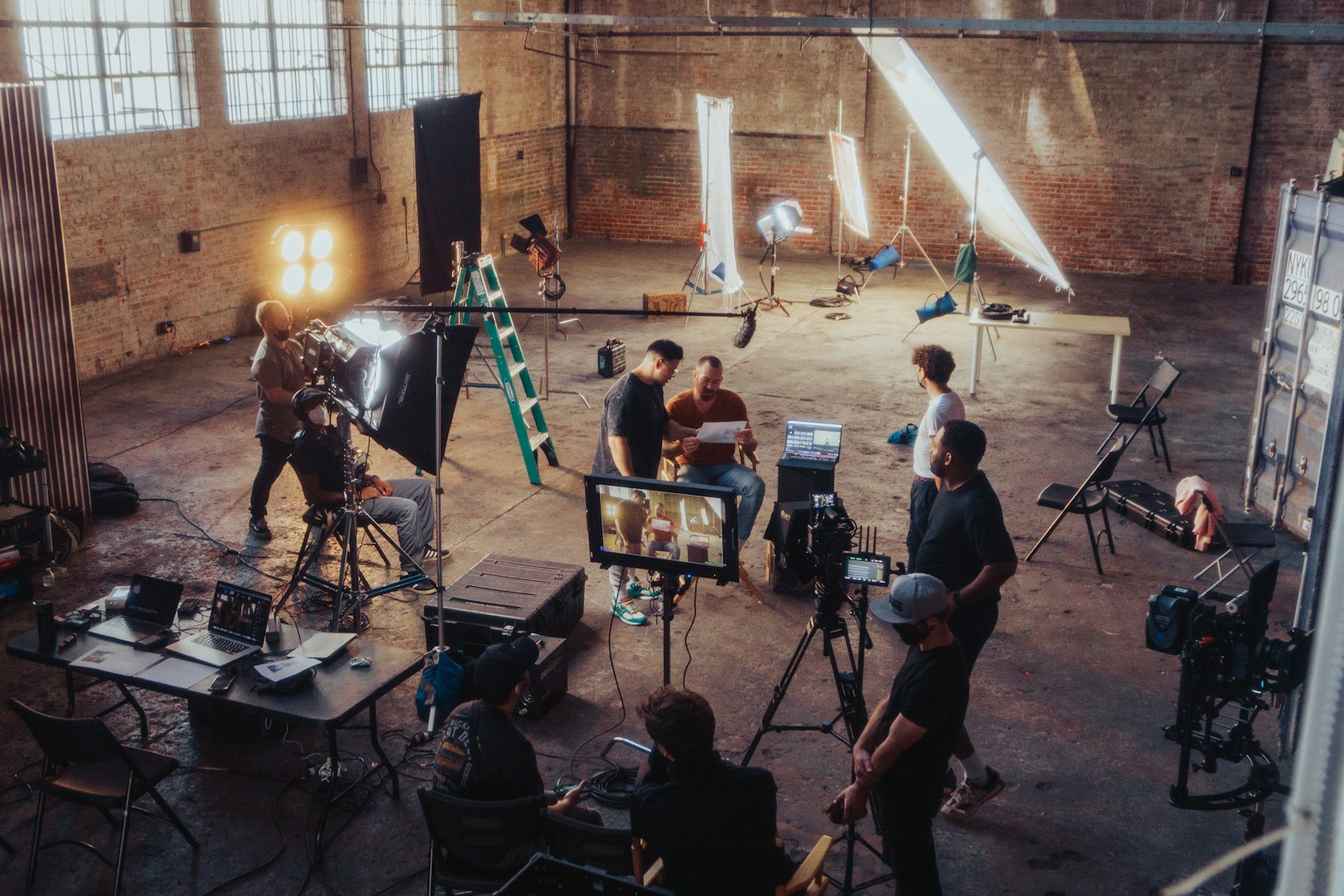
Global advertising spend is on course to cross one point three trillion dollars in 2026, a rise of roughly nine percent on the prior year according to WARC's wider measure of the industry, with Dentsu's own tally putting the milestone at over one trillion dollars and a five percent gain. Money is not the story. Where that money goes is. Buyers are increasingly steering budgets away from glossy, obviously staged commercials and toward a rougher, more observational register, the kind of footage that looks caught rather than composed. The industry has started calling the hybrid a documentary commercial, and the demand for it is now visible in the numbers.
Streaming content investment offers one proof point. Global spend on streaming content rose six percent to ninety five billion dollars in 2025, up from eighty nine point six billion the year before, according to Ampere Analysis, overtaking commercial broadcaster content spend for the first time. Much of that new money is chasing unscripted and documentary formats, genres that built their audience on the premise that what appears on screen actually happened. Advertisers watching those viewing habits shift have drawn an obvious conclusion: an audience trained on real footage grows suspicious of anything that looks manufactured.
The trust deficit fiction cannot fix
PwC's Global Entertainment and Media Outlook projects the sector reaching three and a half trillion dollars in revenue by 2029, with advertising growing roughly three times faster than consumer spending over the same period, a six point one percent pace against two percent. That gap matters for how the money gets spent. When advertising outgrows the underlying economy this fast, it usually means brands are fighting harder for a fixed pool of attention, and attention is the resource documentary style commercials are built to hold. A commercial that resembles a news segment or a fly on the wall short film asks less of the viewer's skepticism than one that announces itself as a sales pitch from the first frame.

The Cannes Lions International Festival of Creativity, the industry's own scoreboard for what counts as excellent work, has rewarded this drift for several award cycles running, favoring entries built on real access and unscripted moments over fully scripted set pieces. Juries measuring the top tier of global advertising are effectively voting for craft that borrows its authority from documentary filmmaking rather than from cinema in the traditional commercial sense. That signal travels downward through the industry quickly, since agencies and production houses study award winners closely when pitching new work.
Where Southeast Asia fits the shift
Southeast Asia's digital economy surpassed three hundred billion dollars in gross merchandise value in 2025, with growth of around fifteen percent year on year according to the Google, Temasek and Bain e-Conomy SEA report, and online media advertising within that economy grew sixteen percent over the same period. Vietnam's own slice reached thirty nine billion dollars in digital economy GMV, up from thirty four billion the year before. A market growing this quickly is also a market still forming its visual identity, and documentary commercial production benefits from environments that have not yet been polished into visual sameness. Ho Chi Minh City registered eight point three seven billion dollars in foreign direct investment in 2025, up twenty four percent year on year, much of it flowing into sectors that need brand storytelling to establish credibility with a new customer base rather than defend an already familiar one.
Vietnam's own policy makers have priced this opportunity explicitly. The national strategy adopted in late 2025 targets cultural industries, film and advertising named among them, at roughly seven percent of GDP by 2030, climbing toward nine percent by 2045. That kind of target only gets set when a government sees measurable commercial upside in storytelling as an export, not just a domestic service.
Studios positioned to shoot and finish this kind of work under one roof, rather than handing a documentary style shoot to a separate crew from the one that later polishes it in the edit, hold a structural advantage. Saigon based houses such as Hoang Films, which has built its portfolio around projects that sit closer to observed reality than to studio fiction, illustrate the kind of production model that this shift in buyer preference rewards: one line of creative judgment running from the first frame shot to the last cut delivered, rather than a documentary style brief filtered through a conventional commercial pipeline.
What buyers are actually asking for
The pattern shows up in the language brief documents use now. Marketers increasingly specify access over control: real employees instead of actors, unscripted customer moments instead of rehearsed testimonials, locations that look lived in rather than art directed. None of this eliminates craft from the process. It relocates where the craft sits, from constructing a scene to recognizing one worth keeping. Retail media and paid social, which together now absorb close to eighty percent of global ad spend according to WARC, reward exactly this kind of footage because it performs better in feeds built for authenticity signals, where users scroll past anything that reads as an obvious advertisement within the first second.
Connected television adds a second pressure point. In the United States, CTV ad spend reached nearly thirty eight billion dollars in 2026, a gain of over fourteen percent, per eMarketer, yet the format still captures only seven point seven percent of ad spend against twenty percent of time spent with media, an attention to monetization gap that advertisers are trying to close with content, not just targeting. Closing that gap tends to favor formats an audience will actually sit through, and documentary commercial production, built on the premise of something worth watching rather than something to be interrupted by, is one of the few categories built for that job by design.
None of the underlying numbers suggest fiction disappearing from advertising. They suggest a market recalibrating what earns a second look, and for now the data points toward the commercial that looks like it was found rather than made.