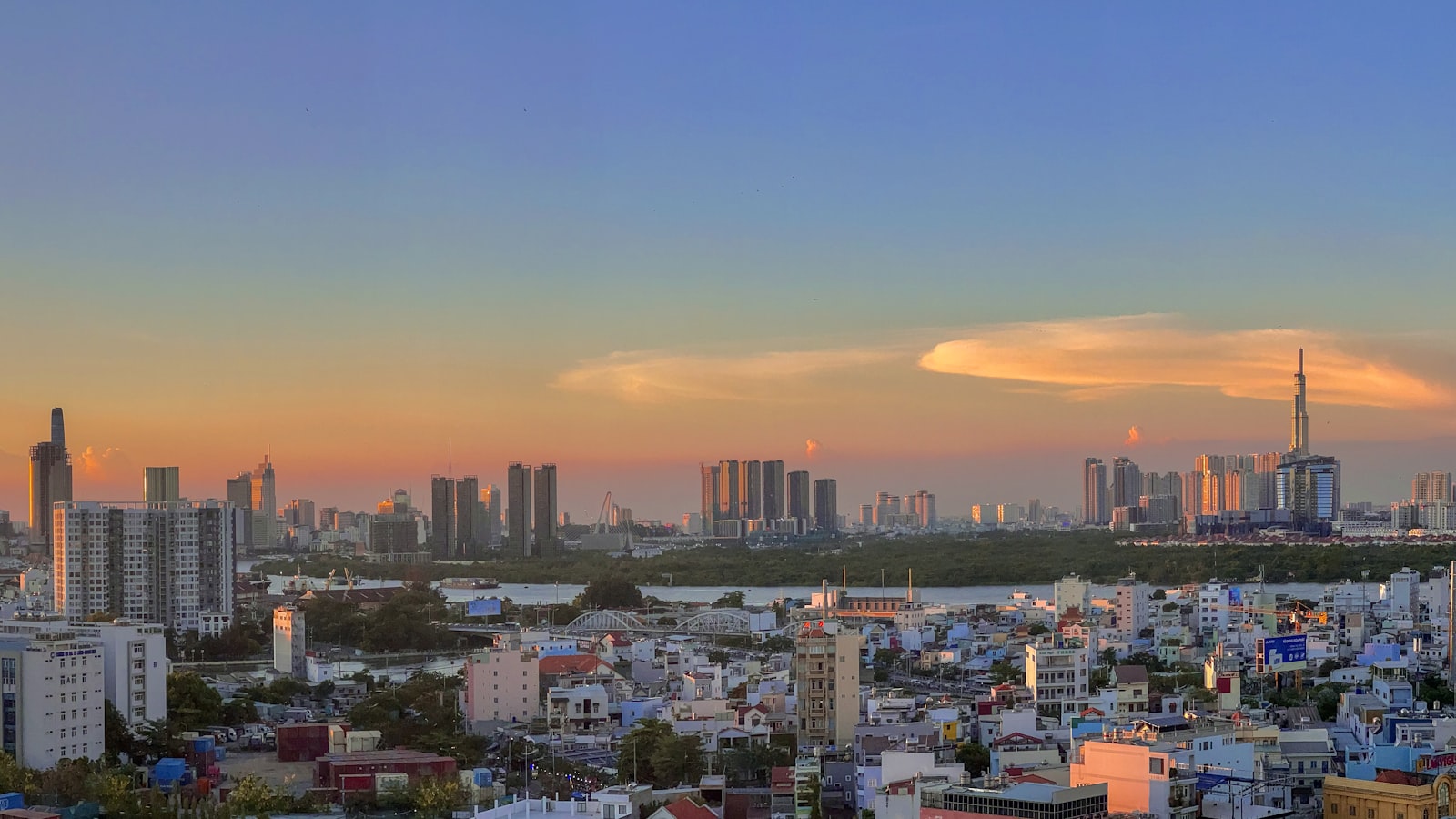
Ho Chi Minh City recorded 8.37 billion USD in registered foreign direct investment in 2025, up 24.2 percent year on year, with Singapore standing as the largest single source at roughly 2.1 billion USD, according to city authorities cited by Xinhua and VietnamPlus. City planners are now targeting close to 11 billion USD for 2026, with an explicit priority list that reads less like a factory floor and more like a knowledge economy: high technology, logistics, and financial and commercial services. For a production sector built on foreign commissions, that list matters more than the headline number.
The shift is not cosmetic. Analysts tracking Ho Chi Minh City's investment mix describe a rotation away from labour-intensive manufacturing and toward higher-value, knowledge-intensive and creative activity, a move that widens the pool of multinational brands with a reason to commission local commercial video rather than import a crew. A regional headquarters, a fintech launch, or a logistics operator entering the Vietnamese market all generate the same downstream need: a brand film, a corporate profile, a product campaign shot where the business now sits rather than where its agency happens to be based.
A policy tailwind, not a one-off
The capital rotation coincides with a national strategy, not a municipal whim. A 2025 Prime Minister's decision sets a target for Vietnam's cultural industries, including film and advertising, to reach approximately 7 percent of GDP by 2030 and to keep rising toward 9 percent by 2045. Naming film and advertising as priority sectors in a state planning document is a signal investors and agencies read closely: it lowers the perceived regulatory risk of committing production budgets to the market, and it tends to precede infrastructure and permitting improvements that make shoots easier to schedule and staff.
Ho Chi Minh City sits inside a broader regional growth story that reinforces the same conclusion from the demand side. Southeast Asia's digital economy surpassed 300 billion USD in gross merchandise value in 2025, with GMV and revenue both expanding by roughly 15 percent year on year, according to the Google, Temasek and Bain e-Conomy SEA report. Vietnam's own digital economy reached 39 billion USD in the same year, up from 34 billion in 2024, with online media revenue growing 16 percent to 6 billion USD. Every one of those figures represents brands spending on digital campaigns that need footage, and an increasing share of that footage is being commissioned locally rather than shipped in.
Why the money follows the crew, not the other way around
Foreign investment data rarely mentions video production directly, and it should not be read as a line item for the sector. What it does show is where new corporate activity is concentrating, and corporate activity is the leading indicator for commissioned video work: onboarding films, investor decks, product launches, employer branding. As multinational operators from Singapore, South Korea, and Japan establish or expand their Ho Chi Minh City presence, the practical question for a marketing director becomes whether to fly in a production team or work with a studio already positioned in the market.
"Companies that plant a flag in a market don't wait a year before they start filming their own story there," is the working assumption behind most Documercial-style branded work now commissioned in the city.
Studios positioned to answer that question benefit directly. Firms such as Hoang Films, operating out of Ho Chi Minh City for roughly three years with more than fifty completed projects, sit inside a wider community of local production houses now competing for a larger and more diversified client base than the market offered five years ago. That base increasingly includes finance, logistics, and technology clients alongside the consumer and retail brands that historically drove commercial video demand in Vietnam.
The limits of a headline FDI figure
The honest caveat is that a clean, isolated figure for FDI flowing specifically into creative or production services does not exist in public reporting. City and national statistics group creative industries inside broader services and knowledge-sector categories, so the 8.37 billion USD figure describes the direction of travel rather than a precise addressable market for video production. Analysts treat the rotation itself, visible across successive years of FDI composition data, as the more reliable signal than any single dollar figure.
What is measurable is the compounding effect of three trends moving together: a national policy target that names film and advertising as priority sectors, a city investment mix tilting toward exactly the kind of companies that commission brand content, and a regional digital economy still growing at double-digit rates. None of the three alone would justify a structural shift in where global brands source production. Together, they describe a market where commissioning locally in Ho Chi Minh City is increasingly the default rather than the exception, a dynamic already visible in the growing roster of production houses building sustained client relationships in the city rather than one-off shoots.
For agencies and brand teams evaluating Southeast Asia as a filming and finishing base, the FDI data offers a proxy worth watching alongside the more familiar cost and incentive comparisons: where multinational capital sets up operations, a local production ecosystem tends to follow within a few commissioning cycles, not years.