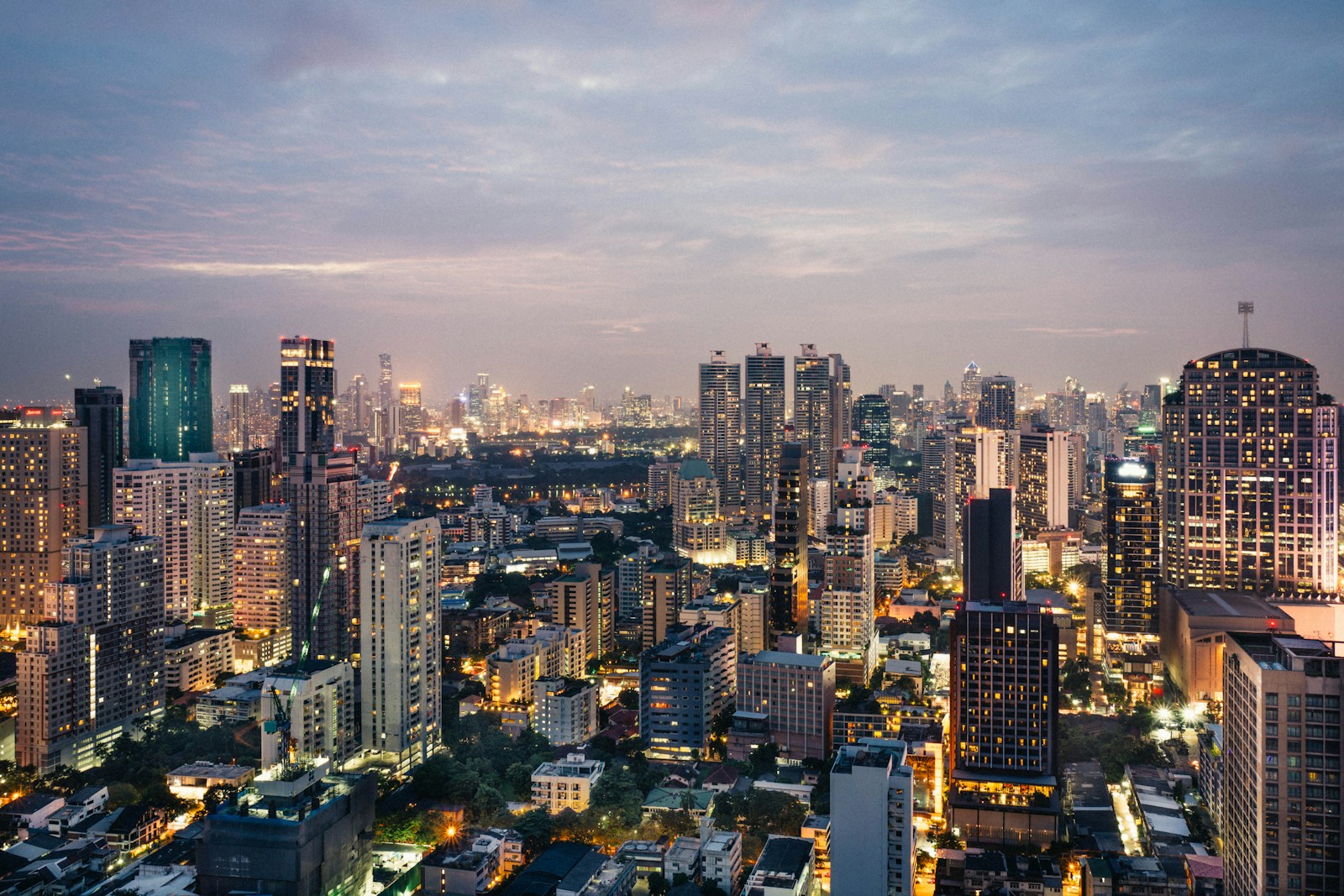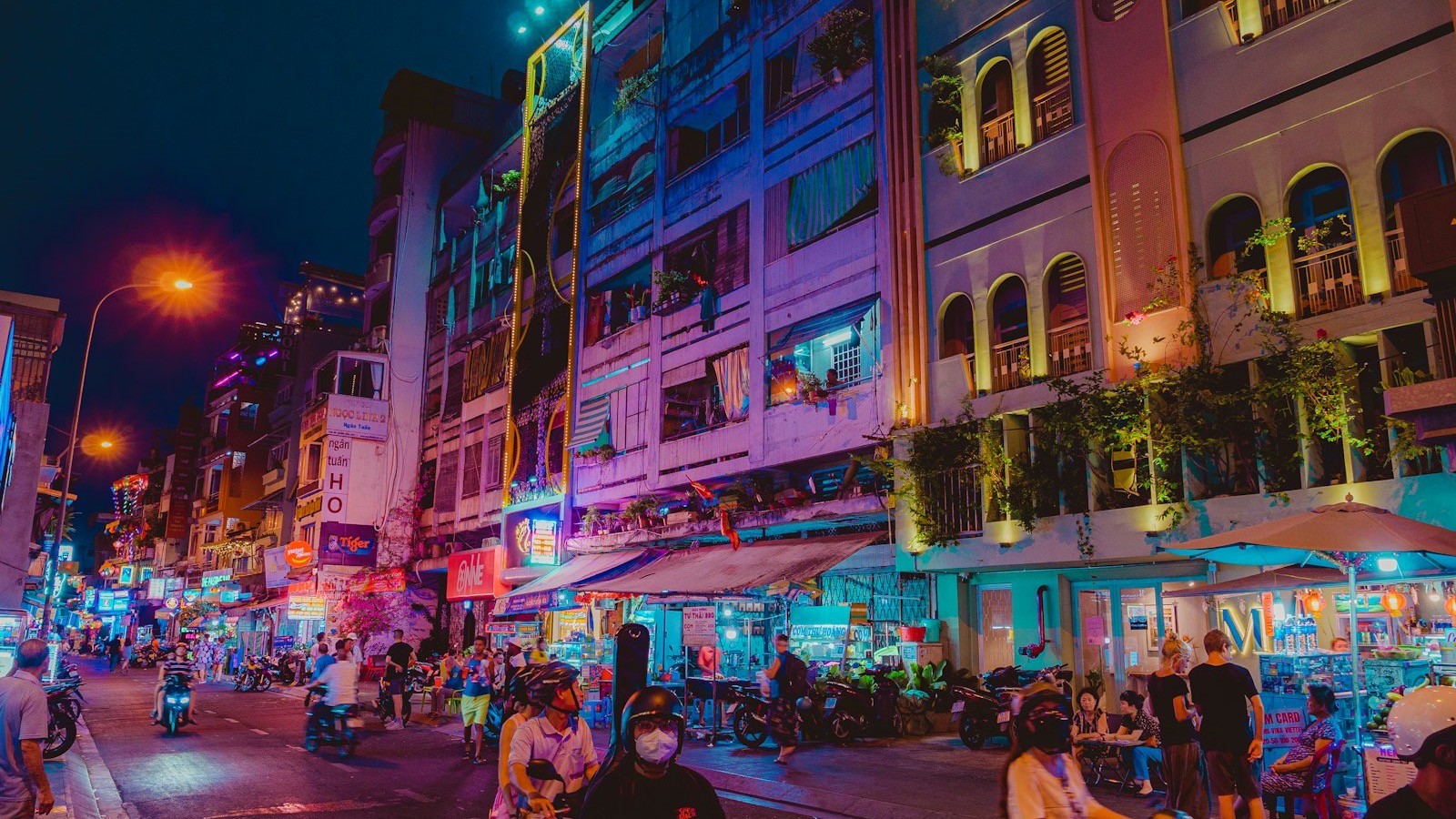
International brands and advertising agencies comparing where to shoot a commercial across Southeast Asia now face a fundamentally different calculus than they did three years ago. The region's production market, once consolidated around established centers, has fractured into three competing ecosystems, each optimizing for different buyer profiles. Thailand has locked in first-mover advantage with a comprehensive incentive structure. Singapore remains the default for domestic Asia-Pacific brands seeking premium domestic talent. Vietnam is consolidating cost leadership while building ambitious capabilities in finishing work. Understanding where the money actually flows, not where the marketing speaks loudest, determines which hub makes sense.
Thailand Builds Volume and Captures Incentive-Driven Work
Thailand's film office confirmed in June 2026 that its cash rebate scheme has now subsidized more than one hundred foreign productions from a dozen countries since 2017, circulating over 20 billion baht into the local economy. The rebate itself operates on a tiered structure: productions spending a minimum of 50 million Thai baht (approximately 1.4 million USD) qualify for a baseline 15 percent rebate, with rates rising as spend increases and topping out at 30 percent effective rate when combined with additional incentive layers. Critically, there is no cap on the rebate amount, meaning larger productions see returns scaled to the size of the shoot.
This structure has proved effective at attracting projects that could previously justify shooting in Los Angeles or London on purely cost grounds. A commercial production burning through 100 million baht across crew, equipment, locations and post production now pockets 20 to 30 million baht back from the government, effectively reducing net spend by a quarter. The permit process streamlined in 2024 now approves applications within ten days, eliminating one of the historical friction points that steered producers toward Singapore or Malaysia instead.

Singapore Faces Cost Inflation and Talent Constraints
The market tightening in Singapore over 2025 and 2026 presents a sharp contrast to Thailand's incentive-driven growth. Commercials budgeted at SGD 50,000 (approximately USD 37,000) to SGD 250,000 in 2024 are now quoted 15 to 25 percent higher, a trend traced directly to three cost drivers: studio rental has climbed 40 percent since 2021, crew wages for experienced professionals have spiked 35 to 40 percent since mid-2024, and competition from regional producers has begun poaching Singapore-trained talent toward Bangkok and Ho Chi Minh City shoots.
The talent pinch is acute. Eighty-three percent of Singapore employers report difficulty recruiting skilled production professionals, a constraint that tightens project timelines and forces producers to book crews months in advance. For a brand whose shoot window is narrow, or whose budget sits at the lower end of the commercial range, Singapore now represents the costliest path to video completion in Southeast Asia. What cost SGD 10,000 to produce in early 2024 is quoted around SGD 12,500 to SGD 13,000 by mid-2026.
Vietnam Consolidates Cost Leadership and Hub Ambition
Vietnam's production economy operates at a fundamentally different unit cost. Crew day rates for a full commercial team (director, DP, camera operator, sound recordist, gaffer) land between USD 2,700 and USD 3,900 per day at the professional tier, a rate that holds even when hiring from established Ho Chi Minh City firms. A straightforward product commercial costs USD 50,000 to USD 150,000 from shoot to final cut, positioning standard-tier projects at roughly one third the Singapore price for equivalent scope.
Ho Chi Minh City's infrastructure and technical services have matured significantly. The city now operates more than 1,200 theater screens, hosts annual production symposia, and has begun attracting international streaming and cable productions as secondary production bases for Asian strategy. Studios like Hoang Films have built finishing capabilities in color, sound design and online editing, allowing productions to shoot in-country and finish under one roof without the need to round-trip footage to Bangkok or Kuala Lumpur.

The cost difference widens for post production work. Where Singapore post producers charge SGD 800 to 1,600 per day for online editing and color grading, Vietnam-based colorists operate at USD 30 to 60 per hour for comparable work, a differential that captures buyers' attention when finishing budgets can run 30 to 40 percent of total project spend.
What the Market Is Actually Choosing
Thailand's rebate success masks a structural reality: the incentive works best for productions large enough to spend 50 million baht or more. Mid-sized commercial budgets (those in the USD 100,000 to 300,000 range) benefit less from the rebate geometry, since the dollar value of savings peaks on higher spends. For those projects, Vietnam's flat cost advantage dominates the decision.
Singapore retains stickiness for brands and agencies whose production centers sit in Singapore, Australia or New Zealand and whose cultural center of gravity remains Asia-Pacific domestic rather than cost-optimized global. The city's premium is effectively a convenience tax for clients who value timezone overlap, English-native crews, and established agency partnerships over aggressive cost comparison. That premium is real: a brand flying talent to Singapore and paying Singapore crew rates will spend three to four times more than an equivalent production in Ho Chi Minh City.
Regional production investments are settling into three tiers: cost-optimized international projects (films, campaign work, streaming series with large budgets) are moving toward Thailand and Ho Chi Minh City to capture the incentive and cost advantage. Domestic Singapore, Australian, and New Zealand brand work remains anchored in Singapore, where the premium for convenient local execution outweighs the surging crew costs. Finishing work (editing, color, sound) is consolidating toward Vietnam, where technical capabilities are sufficient and costs are lowest across the region.
The market has stopped seeing Southeast Asia as one production hub and has begun seeing it as three parallel ecosystems optimizing for different buyers. That fragmentation is likely to persist for the next three to five years, until Vietnam's incentive structure catches up, or Thailand's crew base expands enough to challenge Singapore for premium domestic work.
Sources
Variety, Thailand Film Incentives at Hong Kong FilMart 2026 Shootsta, Video Production Cost in Singapore 2026 Guide EM Production, Crew Day Rates Vietnam 2026 Southeast Asia Desk, Southeast Asia's Screen Wars Thailand Film Office