The geography of production is rewriting itself. Shoot days in Los Angeles fell 22 percent in early 2025 versus a year prior, according to FilmLA, while Southeast Asia is absorbing the displaced work at speed. Yet the region is not homogeneous. Thailand raised cash rebates to 30 percent uncapped, Malaysia renewed its FIMI program with a 300 million dollar fund, Singapore remains a premium finish hub, and Vietnam sits lower on incentives but lower still on the baseline cost. For an international brand or agency comparing where to produce a commercial in 2026, the total economics now turn on which neighbor is worth the flight and which is worth the saving.
Thailand's Incentive Scale
Thailand has become the region's incentive heavyweight. The revamped Film in Thailand office program, active since January 2025, offers a tiered rebate starting at 15 percent for qualifying Thai spend above THB50 million (roughly 1.54 million USD), rising to 20 percent between THB100 million and THB150 million, and hitting 25 percent above that ceiling, with stacked bonuses for local crew hiring, tourism location filming and in-country post production that push the combined incentive to 30 percent with no maximum spend cap. Since 2017, 100 foreign productions from twelve countries have used the scheme, with Thailand consistently cited as the region's most mature production infrastructure, built over two decades of continuous international work. The permit process has been streamlined: no cultural test, one permit covering unlimited locations, and approvals within ten days. For a 10 million dollar production, the 30 percent rebate nets 3 million dollars immediately, materially rebalancing the per-unit crew cost.
Yet incentives are not crew cost. A Bangkok-based director charges between THB15,000 and THB80,000 per day depending on experience (roughly 450 to 2,400 USD). A cinematographer runs THB10,000 to THB40,000 (roughly 300 to 1,200 USD). An editor ranges THB5,000 to THB20,000 (150 to 600 USD). A standard corporate video in Thailand costs THB50,000 to THB100,000 (1,500 to 3,000 USD), while a multi-location premium shoot runs THB100,000 to THB150,000 (3,000 to 4,500 USD). These are day-rate territories where the incentive multiplier becomes decisive: a production that nets incentive rebates absorbs overhead at a dramatically lower total cost, making Thailand the highest-volume destination for foreign production in the region.
Malaysia and Regional Alternatives
Malaysia presents a second-tier alternative. The Film in Malaysia Incentive, renewed through 2030 and backed by 76 million dollars in fresh allocation, offers 30 percent cash rebate on qualifying Malaysian spend plus a 5 percent cultural uplift, effectively 30 to 35 percent, with minimum qualification spend of 1.2 million USD for production and 360,000 USD for post production alone. FINAS recently broadened the legal definition of film to include TV, documentary, animation and AI generated content, widening the pool beyond feature work. The incentive tier is comparable to Thailand, but the administrative thresholds are higher and the production infrastructure thinner outside Kuala Lumpur, making Malaysia a draw primarily for larger productions that can absorb the minimum spend requirement and the planning lead time (applications must be submitted three months prior).

Singapore's Premium Positioning
Singapore operates on an inverse logic. No cash rebate or cultural incentive exists. Crew costs run 35 to 40 percent above 2024 levels, according to local production guides, a spike driven by competitive pressure from Thailand and Malaysia poaching crews and budgets. A corporate video two to three minutes in length on a single location runs SGD6,300 to SGD12,200 (roughly 4,700 to 9,100 USD). Crew day rates span SGD1,200 to SGD3,500 for full crew and SGD800 to SGD1,600 for editing alone. This positions Singapore as the premium finish and color-grading destination for productions already shot elsewhere, or as the last-resort on-location option for international brands for whom crew pedigree and international standards documentation matter more than cost per day. As the largest financial center in Southeast Asia and the preferred offshore location for Fortune 500 supply chain and legal work, Singapore attracts brands for which location brand collateral matters. But for pure production cost, it is roughly 20 to 30 percent more expensive than Thailand or Vietnam.
Vietnam's Integration Model
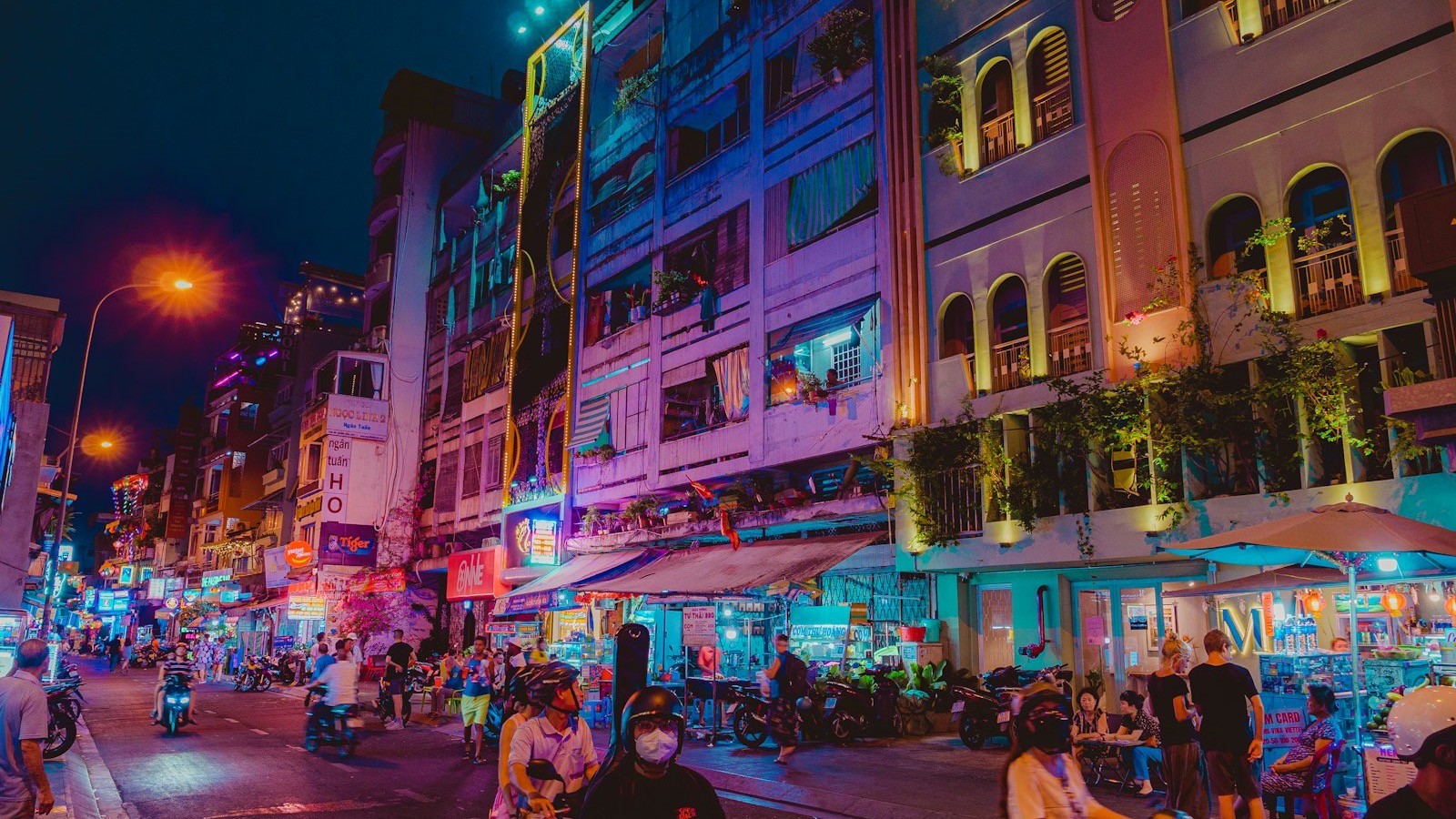
Vietnam historically competes on baseline cost. No cash production rebate exists. Crew day rates run 30 to 50 percent lower than Thailand and 50 to 70 percent lower than Singapore, though exact per-project rates vary by vendor and crew tier. Vietnam is reported to be 11 percent cheaper than the Asia average for opening a production company, according to startup cost aggregators. A production house such as Hoang Films in Ho Chi Minh City finishes work in house, which vertically integrates margin and avoids the costly subcontracting chains that add 15 to 25 percent to regional budgets. This model addresses one of the persistent challenges in regional production: the lack of vertically integrated shops that can manage both capture and finishing with one creative hand controlling the grade and cut, reducing rework cycles and the hidden cost of reshoot feedback loops. For agencies and brands already operating with tighter budgets, or for productions where cost per finished frame is the primary constraint, Vietnam offers a model that amortizes finishing cost into the shoot itself.
The Real Total Cost
The total cost calculus now runs across four variables: incentive size (Thailand and Malaysia win), baseline crew cost (Vietnam wins), post production ecosystem (Singapore and Vietnam compete, with integration favoring Vietnam and pedigree favoring Singapore), and international buyer confidence in the final deliverable. A 30 second spot shot in Thailand with a 30 percent rebate nets roughly 3,000 to 5,000 USD back into the production budget depending on final spend. The same spot shot in Vietnam with no rebate but 50 percent lower crew baseline cost can produce comparable quality at 40 to 50 percent of the Bangkok price. Singapore offers neither, but delivers the brand collateral cachet and international crew pedigree of a first world production center. Malaysia sits between, with incentive muscle but thinner infrastructure outside the capital.
Capital Rotation and Market Stratification
Regional capital is rotating toward the highest incentive intensity and the integrated shop model. Ho Chi Minh City's gross regional domestic product grew 8.55 percent in the first half of 2026, the strongest first half in a decade, with capital flowing toward high-value, knowledge intensive sectors including creative services. FDI into Ho Chi Minh City reached 6.8 billion USD in the first half of 2026 alone, with a full year target of 11 billion. For production companies in Vietnam that can finish work domestically, the structural advantage widens as each incremental dollar of crew hire stays on the balance sheet as margin rather than flowing to post production vendors in a different geography. Thailand will continue to dominate volume, sustained by incentive scale and mature infrastructure. Singapore will remain the last mile for brands where location prestige overrides cost. Malaysia will win select larger productions that meet minimum spend thresholds. Vietnam will continue to capture the price sensitive work and the full service model work, where one studio controls from brief through final delivery. The regional production market is no longer unified. It is now stratified by incentive, by cost per frame, and by integration model. For the commercial buyer, the choice is now a direct calculation on which geography serves which margin and which creative outcome.